What's next for SaaS?
Should non-technical builders give up on the SaaS dream now that anyone can build software with AI? Spoiler: no. Plus my current building stack and a pocket money app for my kids.
Hey, it’s been a while.
I’m currently in Madrid with the family and it’s too hot to go outside during the afternoon, so while the kids are watching TV in our underfloor-cooled (genius concept) apartment it felt like a good time to write.
Right now I’m trying to figure out what AI development means for the future of the SaaS market, and specifically for non-technical builders like me. Should we give up on the SaaS dream? (Spoiler: no)
I haven’t written for a while because it’s fair to say my career has changed massively over the past 8 months. Within the space of a few weeks it went from being a hands-on solo developer down in the trenches, to acting as a product manager with a team of AI devs.
Interesting times. So what does that mean for SaaS?
If “everyone” can build their own software, will SaaS still be a thing?
I’ve seen a few different opinions on this, ranging from the “SaaS is dead” people to the “SaaS will survive but only in X situation”.
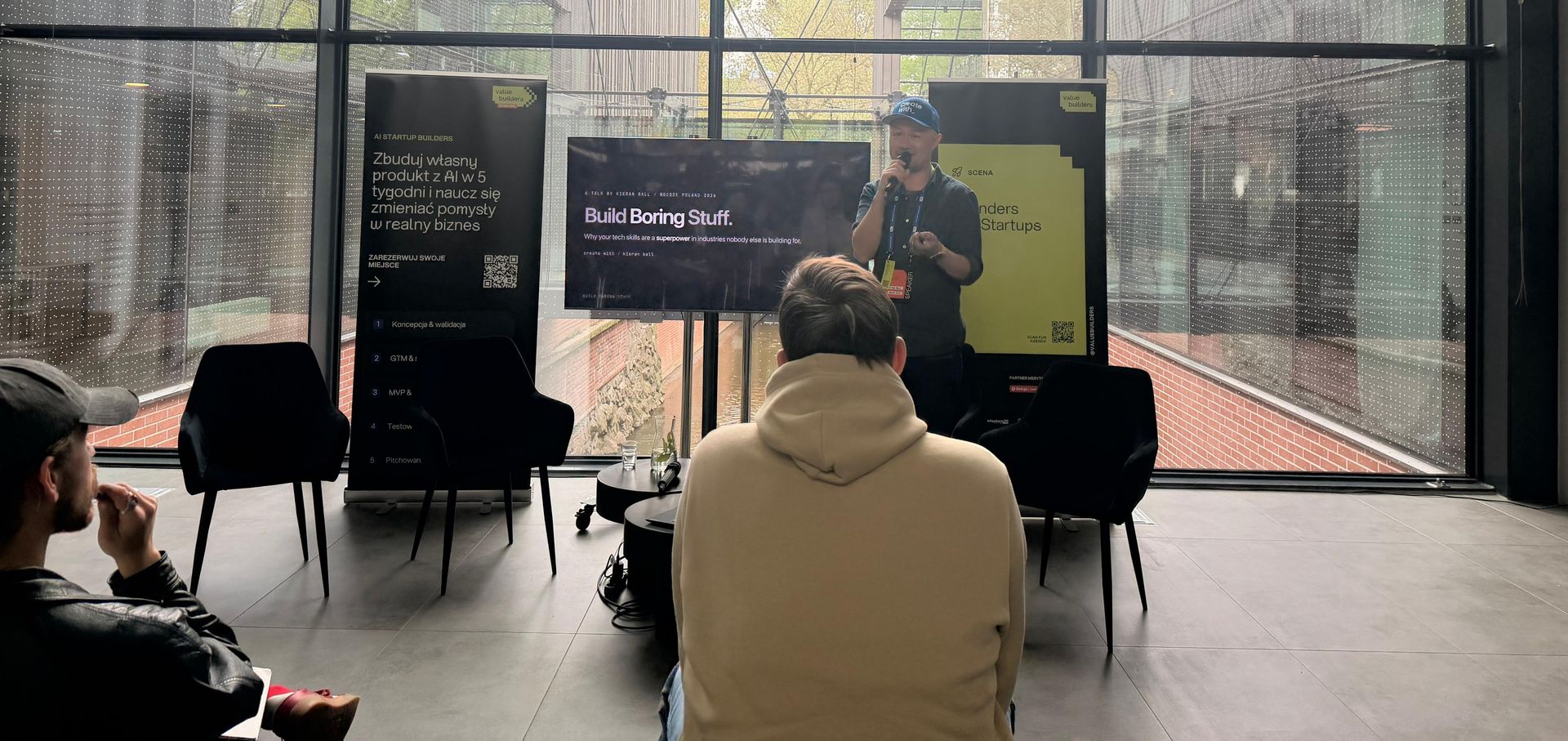
In May I gave a talk at the No-Code Poland conference in Gdansk on the topic of “boring SaaS ideas”.
Here are some takes that make a lot of sense to me:
- Selling software to tech-savvy markets IS dead. The quickest adopters of AI development have of course been the tech bubble. A few years ago I had success building a couple of SaaS products aimed at Indie Makers on Twitter. Those days are gone. Unless your SaaS is super technical, there’s no point trying to sell software to people who know how to build their own super fast (and enjoy doing it).
- Boring niches and legacy industries will need SaaS for a long time. Tech adoption takes a long time for most people. Loads of industries are still using Windows 2000. Even though ChatGPT is seeing widespread adoption, there’s a big difference between talking to a chatbot about your health problems and building functional software that you’ll actually use. There’s an opportunity to disrupt a lot of these industries but you need to have solid knowledge of their problems and a way in.
- The market is getting flooded with crappy software and trust will erode. Just like when Amazon got flooded with cheap copies of almost everything and suddenly you had to spend time reading lots of reviews, software is about to have the same moment. Reputation and trusted brands will matter more than ever. Building quality software and getting external certifications are the way to go.
- Expectations will increase while prices decrease. An abundance of choice means SaaS founders will need to create better, slicker, more full featured products to stand a chance. And prices will decrease overall as buyers are comparing against free or extremely low cost options. Perhaps monthly subscriptions will gradually phase out for all but the best products.
- People from non-technical backgrounds have an advantage. We have knowledge and experience of fields and industries that are probably not yet saturated with developers looking for SaaS ideas. Lean into this. The more boring the better.
Most of these changes are still in the future. Building normal SaaS products with monthly pricing is still a viable option right now, it just doesn’t have the same future timeline as it used to, and valuations will reflect that.
My current building stack
- I almost exclusively build using Claude Code in the Claude desktop app. It’s improved so much over the past few months. Prior to that I was using multiple instances of Ghostty as I like to work on 5+ projects simultaneously, but I haven’t opened Ghostty in a couple of months now. The Claude desktop app is pretty decent although there is still room for improvement.
- Most of my apps use either Supabase or Convex as a backend/database. Convex is a bit more suited to AI building as the entire database schema is stored in code in your app, but there are some situations where a Supabase db makes more sense. Just ask AI which suits your use case. Convex pricing seems friendlier for having multiple projects.
- Most apps are deployed on Vercel, but I’ve also started using Cloudflare recently too as it’s almost always the cheapest option for everything.
- I mainly use the Anthropic models (Opus 4.8, Opus 5, and Fable) and honestly haven’t noticed a big difference between them. But I’ve also wired up Codex into Claude Code so now if I want a second opinion I can just ask it to run some sub agents using Codex models.
- I’ve also just downloaded an app called bb which a couple of my favourite builders have recommended. I’ll report back once I’ve had a chance to use it.
What I’ve been working on
In terms of client work, I’ve spent the past few months converting a number of apps from other platforms (Lovable, Bubble) to custom coded stacks using Claude Code. I’ve been pleasantly surprised at how achievable it’s been. Overall it’s given me a lot of confidence that your app’s stack really doesn’t matter. Rebuilds and migrations in the age of AI are nowhere near as costly as they were previously.
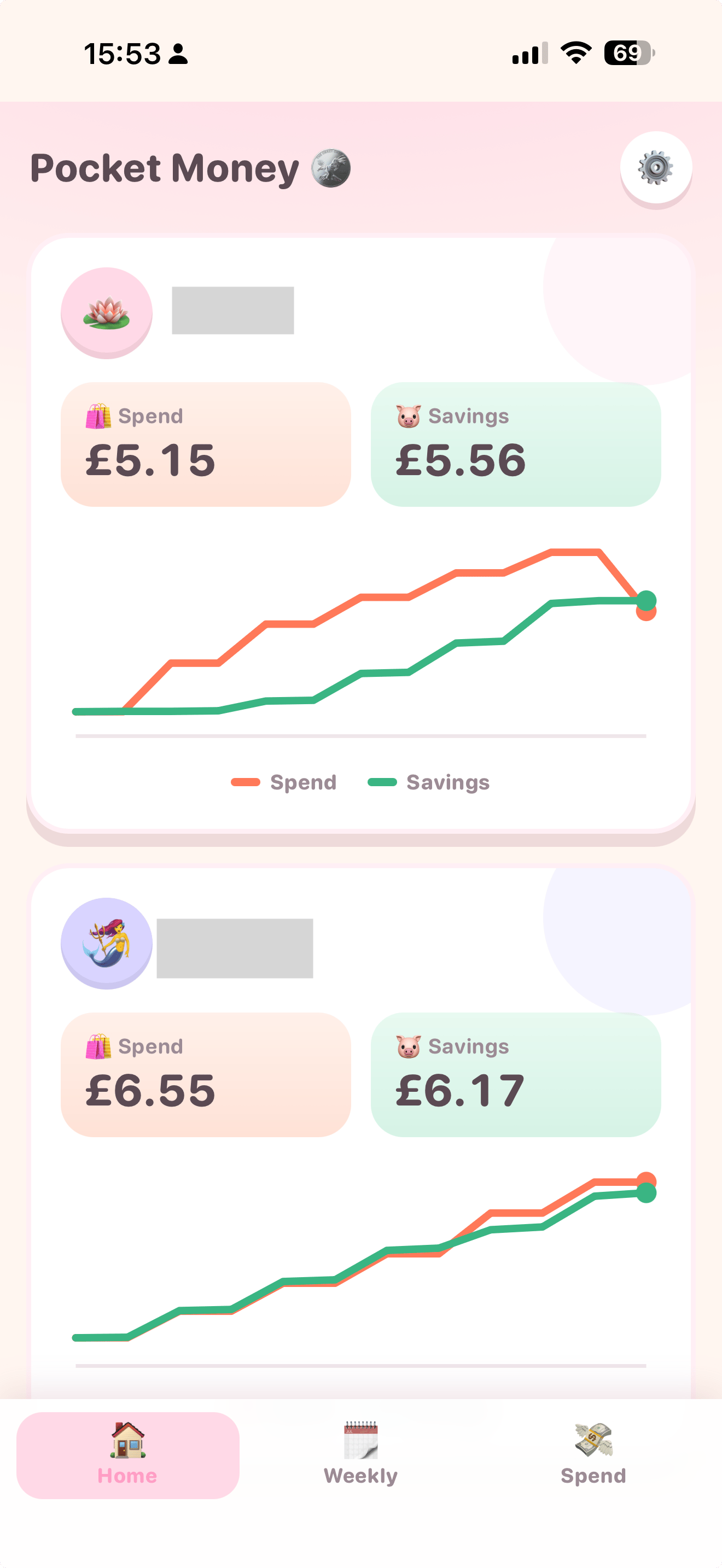
But honestly, the favourite thing I’ve built recently is a pocket money app for my kids. I wanted to start giving them pocket money to teach them about financial responsibility, but it seemed impractical to do it with cash.
It’s a simple progressive web app with a Google Sheets backend. It lives on my phone. It took about 3 hours to build, a lot of which was taking on board design feedback from the kids!
I’ve never used Google Sheets as a backend like this before but Claude Code made it pretty simple, although there was some fiddling around with Google Apps Script.
I used Google Sheets because a proper database seemed like overkill and it means I can go in and edit things at any time, from my phone. Even my kids’ names, emojis, and pocket money defaults are defined in the Google Sheet.
Here’s what it does:
- Tracks two kids’ pocket money with separate “savings” and “to-spend” pots for each child.
- Runs the weekly Sunday top-up (up to £2 per child) and automatically adds 2% weekly interest on savings to teach compounding (I added a feature where they get an extra 10p for every brave thing they did that week, to encourage them to step outside their comfort zones more).
- Uses a Google Sheet as the database, with an append-only ledger so every top-up, spend, and correction stays traceable.
- A cute kawaii-styled PWA on my phone for logging top-ups and spending on the go.
- Shows live balances on a TRMNL e-ink display in the kitchen, with mascots and a savings-over-time chart that refreshes every 15 minutes.
What can we do to stay ahead?
This is definitely a worrying time to be in any knowledge-based job. AI is moving so fast. Even if it turns out it was overhyped and overestimated, which I do think will happen, everything I’ve seen tells me there will still be huge disruption to a lot of industries simply because AI can do a lot of tasks very effectively.
If you’re reading this you’re already in a great position. Make sure you keep strengthening your learning muscle by building.
Here’s my challenge to you for this week:
Pick one annoyance in your life and build a tiny app for it. Mine was Pocket Money.
Let me know what you build!
Cheers,
Kieran
